No products in the cart.
Archive
Auguste Herbin
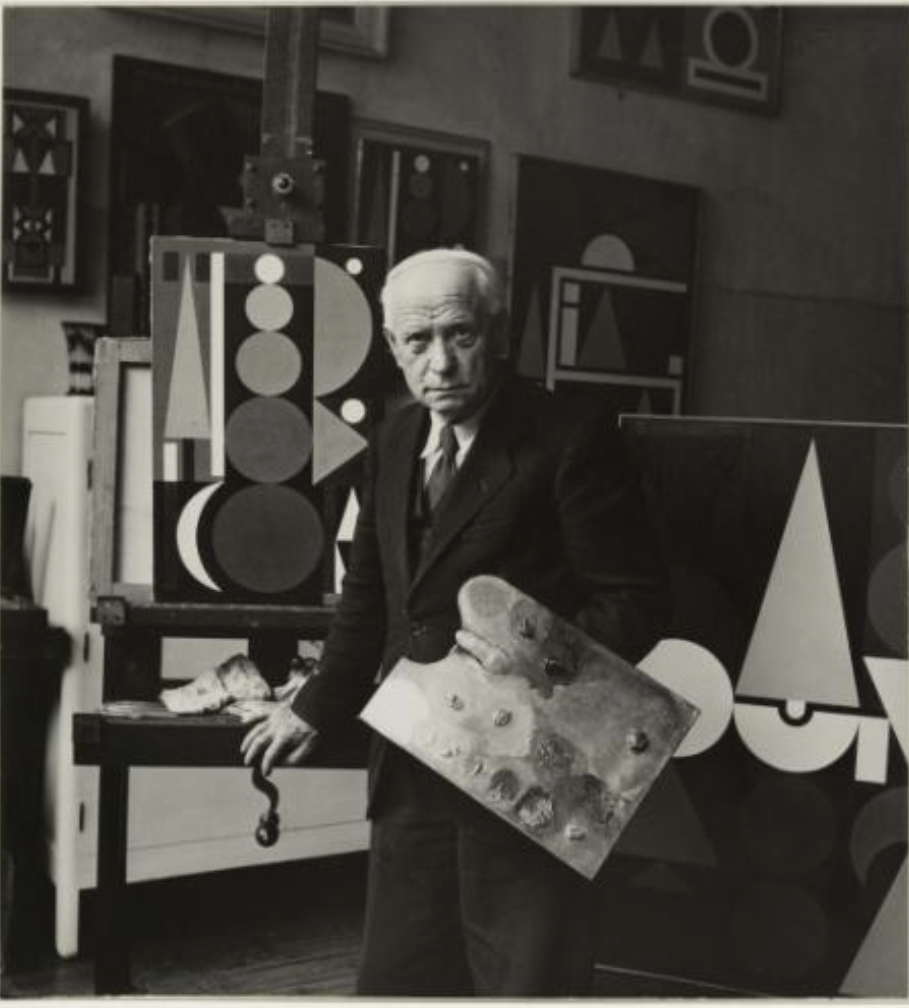
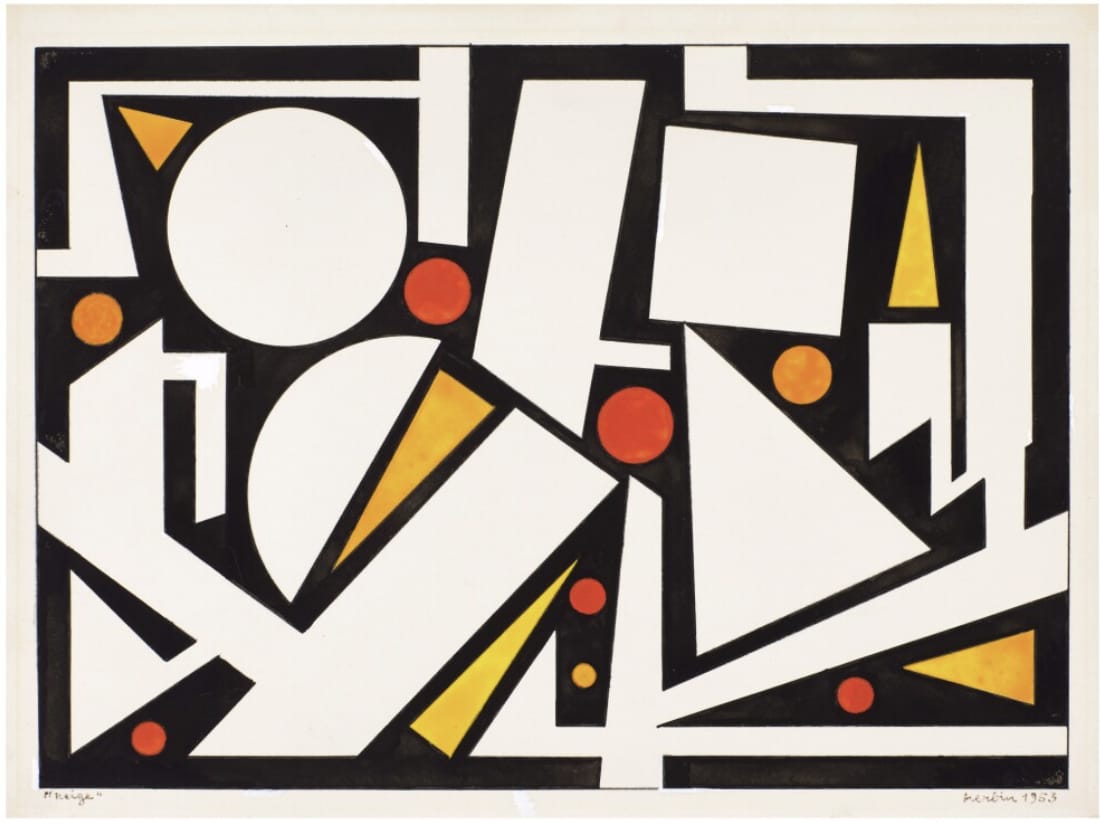
Auguste Herbin (1882–1960)*A founder and activist of geometric abstraction, Auguste Herbin established himself very early as one of the major players of modernity in France. As a Cubist in 1909, he participated in 1912 in the historical exhibition of the Golden Section, before becoming, throughout his career, one of the most ardent defenders of pure abstraction. Co-founder in 1931, with Georges Vantongerloo, of the association Abstraction-Création, whose headquarters are located at his home, boulevard Masséna in Paris, Herbin plays a central role in the structuring and dissemination of abstract art, bringing together around him a large part of the non-figurative artists of the inter-war period.Despite this early engagement, he had to wait until the post-war period to gain wider recognition among the public, notably on the occasion of his first personal exhibition at the Galerie Denise René in 1946. It marks a decisive turning point in the reception of his work and will be followed by other important presentations that will help to assert his place in the post-war abstract scene. All of his plastic research is based on a principle clearly formulated in his theoretical work L-Art non figurative non objective (1949). Herbin develops a system based on a rigorous repertoire of geometric shapes — circles, squares, rectangles, diamond and triangles — associated with the use of bright and contrasting colours. These are chosen according to their symbolic value, with particular reference to Goethe's color theory. This method confers on his art an