No products in the cart.
Archive
Hans Hartung
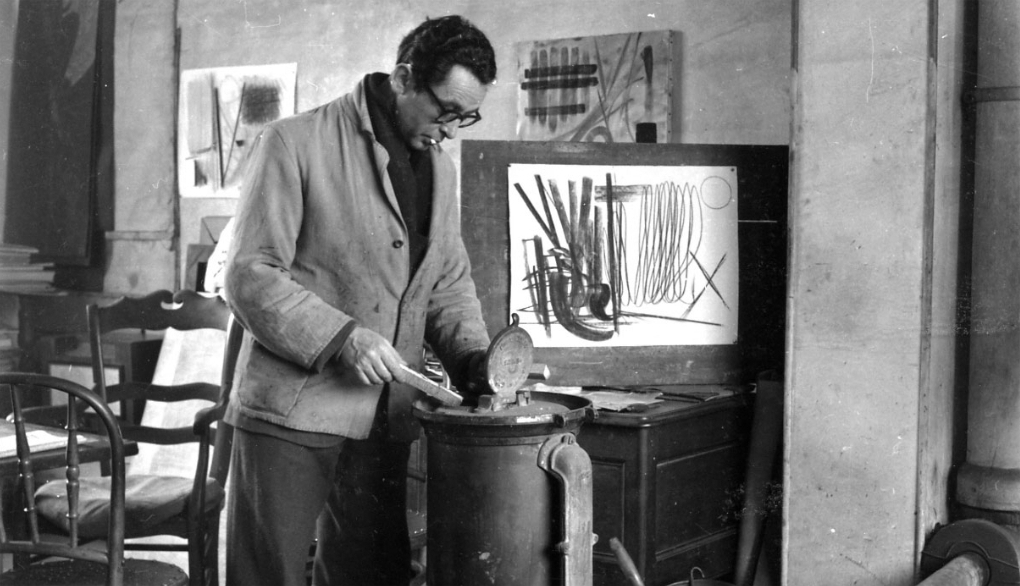
Hans Hartung (1904–1989)A great figure of abstraction and pioneer of abstract art, Hans Hartung is recognized as the « father of tachism » and one of the founders of gesture abstraction. His work, which had already been fully constituted before the Second World War, would not be truly recognized until after 1945.Having come from a community of doctors and amateur musicians, Hartung developed a musical sensitivity very early on that nourished his perception of rhythm, momentum and speed, essential dimensions of his painting. His early vocation is placed under the sign of instinct, fulgurance and sign. From childhood, the experience of thunderstorm and lightning forges in him the sense of the speed of the line and the urgency of spontaneity, the foundations of his plastic language .Very young, the drawing becomes central and gradually moves towards abstraction. Through the inks, watercolours and fusals of the 1920s, Hartung abandoned any figure in favour of a set of spots, lines and rhythmic tensions. At the same time, astronomy and photography nourish his relationship with reality, conceived as fragmentary, ephemeral and seizing by gesture.Formed in German academies while studying the ancient masters (Rembrandt, Goya, The Greco) and German expressionists, Hartung refused geometrism and pursued a personal path. His stay in Paris from 1926 strengthened his interest in Cézanne, Van Gogh and Cubism, particularly in his reflections on the relationship between aesthetics and mathematics, without ever questioning the primacy of gesture.