No products in the cart.
Archive
Victor Brauner
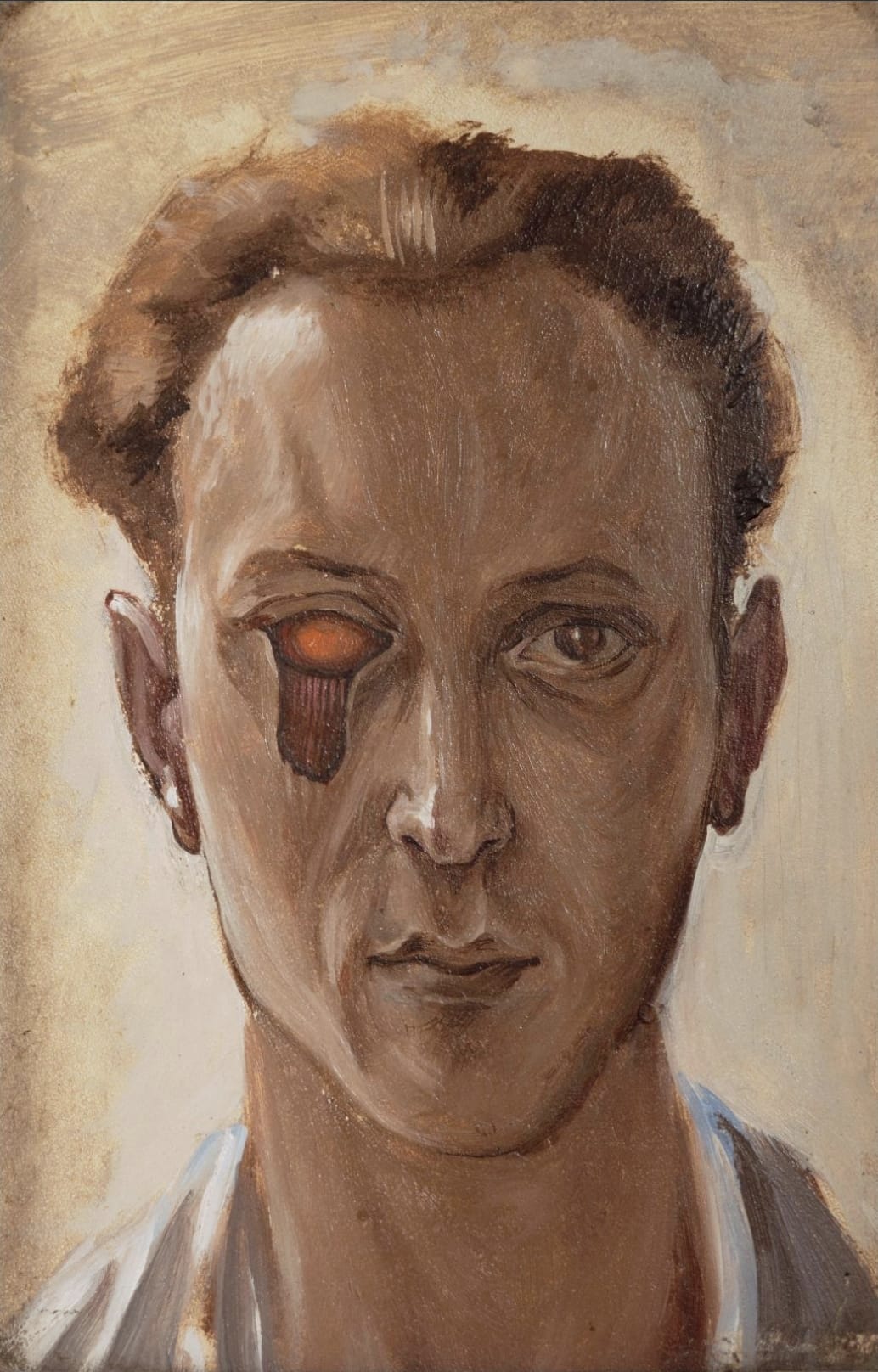
Victor Brauner (1903–66)A singular figure of historical surrealism, Victor Brauner established himself in the 1930s as one of the most deeply engaged artists in exploring the unconscious, symbol and myth. Surrealist of the first hour, he received the support of André Breton, who prefaced his first personal exhibition in 1934 at the Pierre Gallery. Despite remaining on the margins of all orthodoxy, Brauner developed within the movement an intensely personal pictorial language, nourished by dreamlike visions, esoteric references and a claimed autobiographical dimension. During the Second World War, which he fell back into the Lower Alps, Brauner continued his work in relative loneliness. At the end of the conflict, installed on Rue Perrel in Paris, he painted the Lion ensemble, light, freedom, presented in 1947 at the Cahiers d'Art. This period marks the opening of a succession of cycles that now structure its course: The Poet's Codex (1946–1947), La Mammalie (1948), the autobiographical series of Victors or Onomatomanie (1949), Les Rétractés (1950), then large ensembles mixing painting and wood cut out such as Mythology and Mother's Day. In 1948 Brauner broke with the surrealist group following his disagreement with Matta's exclusion. This rupture in no way interrupted his search, which, on the contrary, deepened in a more internal and autonomous direction. An unconscious painter, he constantly accompanies his plastic work with texts, notebooks and theoretical reflections, where he defines his painting.