No products in the cart.

Archive
Victor Vasarely
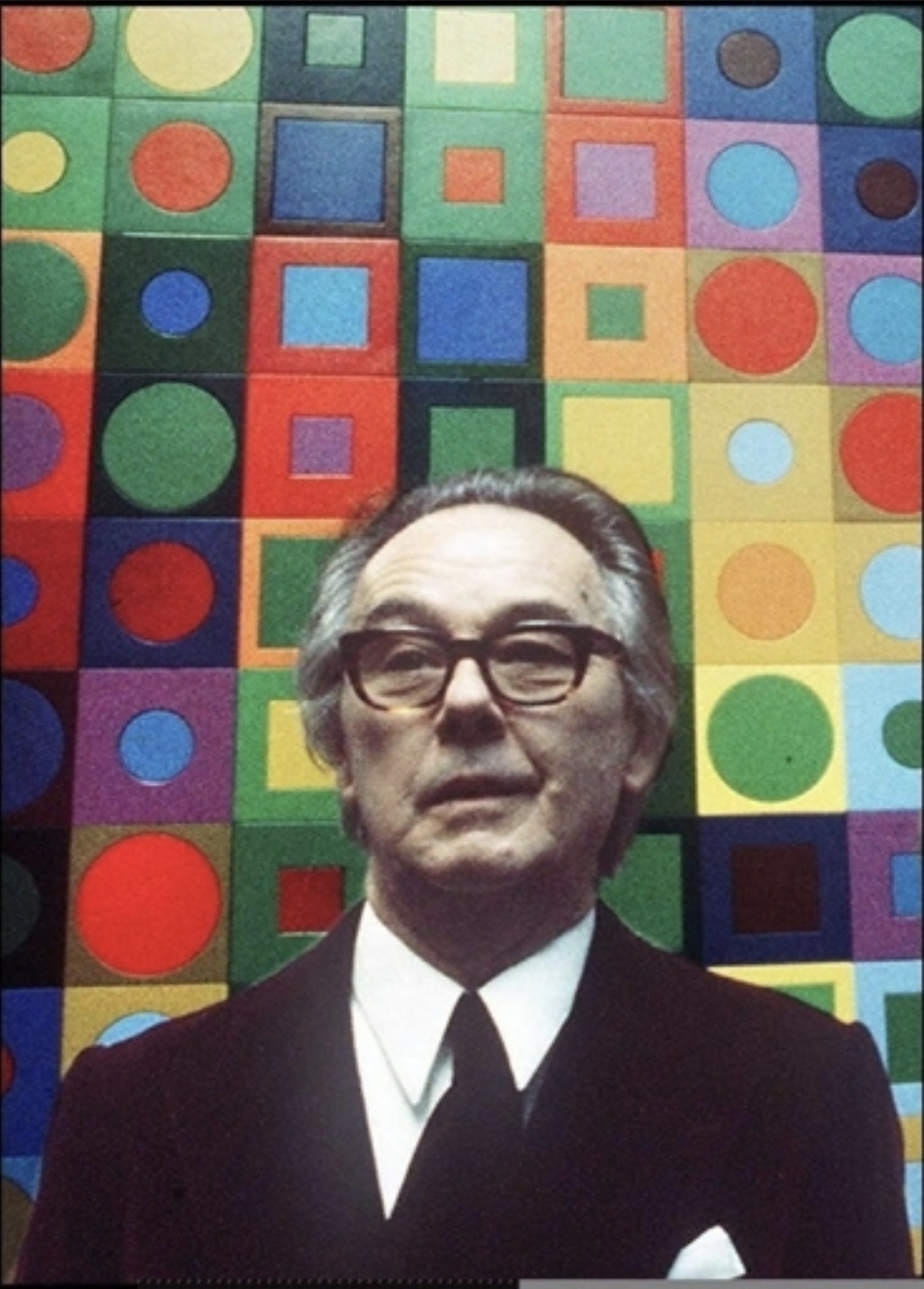
Victor Vasarely (1906–1997)A major figure of kinetic art and direct heir to the Bauhaus, Victor Vasarely developed a work based on geometric abstraction, optical illusion and the notion of movement. Formed in Hungary with Alexander Bortnyik, he moved to Paris in the 1930s, where his graphic artist's activity feeds his first black and white plastic research, centered on visual perception and deformation of form.From the 1940s to the 1950s, Vasarely committed himself resolutely to abstraction, developing a « Plastic unit » based on elementary geometric shapes and pure colours. In 1955, he published the Yellow Manifesto, laying the theoretical basis for kinetic art. His ambition is that of a total art, integrated with architecture and the urban environment, accessible to all and free from the notion of uniqueness of the work. Presented internationally since the 1950s, exhibited in major institutions and awarded numerous awards, Vasarely has profoundly marked the history of art of the twentieth century. His legacy extends through the Vasarely Foundation and a pioneering work at the crossroads of art, science and urban planning.